
Canada’s Designation of the IRGC as a Terrorist Entity: What It Means
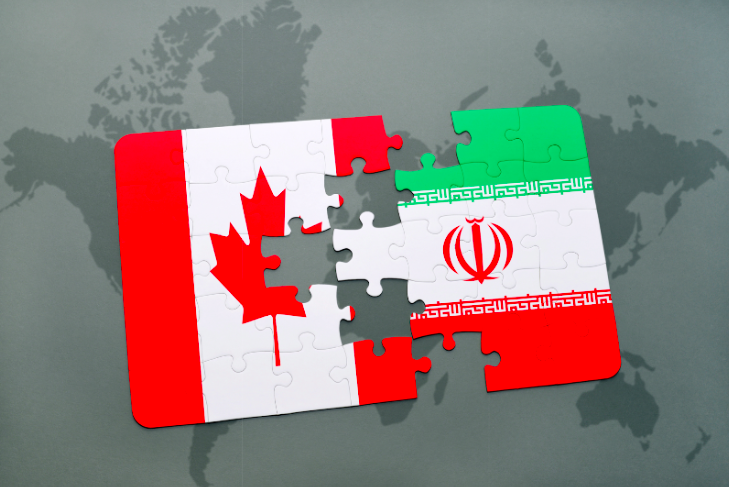
After years of advocacy by Secure Canada and other security experts, on June 19, 2023, the Government of Canada officially designated the Islamic Revolutionary Guard Corps (IRGC) as a terrorist entity under the Criminal Code.
Secure Canada applauds all the allies and partners that pushed this issue over the finish line. This designation follows years of investigations, warnings from intelligence agencies, and advocacy from national security experts regarding the IRGC’s infiltration of Canada’s financial and social systems.
See Secure Canada’s memos arguing for the listing from 2019 and 2021.The IRGC, an arm of the Iranian regime, operates far beyond Iran’s borders, supporting terrorist activities, orchestrating attacks, and financing proxies such as Hezbollah. Canadian security agencies, including the Canadian Security Intelligence Service (CSIS) and Public Safety Canada, have repeatedly warned about the IRGC’s role in terror financing, recruitment, and illicit activities on Canadian soil. Investigations have revealed how IRGC-backed networks launder money, smuggle narcotics, and conduct cyber-influence operations in Canada, posing a direct threat to national security.
Why the Designation Matters
The listing of the IRGC as a terrorist entity has significant legal and operational consequences:
- Criminalizing IRGC Affiliation
- Under Canadian law, it is now a criminal offense to knowingly support, fund, or facilitate the IRGC’s activities. Any individual or organization linked to the IRGC can face prosecution.
- Asset Freezing and Seizures
- Financial institutions are required to freeze assets linked to the IRGC, cutting off funding streams that support terrorism.
- Terror Financing Crackdown
- Canada’s designation strengthens its ability to disrupt IRGC-affiliated money laundering and smuggling networks, which have been documented operating within the country.
- Immigration and Border Security Measures
- Known IRGC members and affiliates are now barred from entering Canada, while those already within the country could face deportation under anti-terrorism provisions.
- Global Coordination Against Iran’s Terror Networks
- Canada’s move aligns with U.S. and European actions, reinforcing international pressure against Iran’s state-sponsored terrorism.
IRGC Activity in Canada
Investigations have revealed multiple cases of IRGC and Hezbollah operatives using Canada as a base for recruitment, fundraising, and influence operations:
- Over 700 Iranian Operatives in Canada – A year-long Global News investigation in 2023 uncovered that upwards of 700 individuals with ties to the Iranian regime, including the IRGC, were operating within Canada. These operatives have been involved in activities ranging from surveillance and intimidation of Iranian-Canadians to illicit financial operations.
- Hezbollah’s Financial Network – The Public Safety Canada Report on Terrorist Financing identified Hezbollah’s use of Canadian charities and businesses for money laundering, directly benefiting Iran’s militant activities.
- Cyber Influence Operations – Intelligence reports indicate that IRGC-linked entities have engaged in online disinformation campaigns to destabilize Western democracies, including Canada.
- Terrorist Financing via Organized Crime – The United Nations Office on Drugs and Crime (UNODC) has highlighted how IRGC-backed networks engage in drug trafficking and smuggling operations to raise funds for terrorism
The Need for Continued Action
While the designation of the IRGC as a terrorist entity is a critical step, national security experts stress the importance of continued vigilance. Canada’s commitment to combating state-sponsored terrorism must remain firm. The IRGC’s influence is global, and its presence in Canada is a direct threat to national security. The 2023 terrorist listing ensures that Canada is no longer a safe haven for IRGC affiliates.
LOOKING BACK: Secure Canada’s arguments for banning the IRGC:
1. The IRGC’s Terrorist Legacy is Unquestioned
Iran is the world’s most notorious state sponsor of terrorism, and its Islamic Revolutionary Guard Corps (IRGC) is the primary force behind this global policy. The IRGC and its proxies have been responsible for numerous terrorist attacks, including those targeting Canadian nationals over the past 42 years.
2. The IRGC Qualifies as a Terrorist Entity Under Canadian Law
There is no legal barrier to listing the IRGC. Under Section 83.01(1) of the Criminal Code, an “entity” can be any person, group, or organization involved in terrorism. The IRGC, which engages in and supports terror, fits this definition and should be fully designated as a terrorist entity.
3. Canadian Courts Have Found the IRGC Liable for Terrorism
The IRGC has been named in multiple lawsuits under the Justice for Victims of Terrorism Act (JVTA). Canadian courts have ruled against Iran and the IRGC, awarding billions in damages to terror victims. In 2021, a court found that the IRGC’s shootdown of Flight PS752 was an intentional act of terrorism.
4. Precedents for Listing the IRGC
Canada has fully designated terror groups like Hezbollah and Hamas, recognizing that their political and military wings are inseparable. The UK and other allies have taken similar measures. The IRGC operates no differently—it is a unified entity dedicated to global subversion and terrorism.
5. Bipartisan Support for Designation
In June 2018, Parliament passed a motion, with support from the Prime Minister and the majority of Liberal MPs, calling for the IRGC’s immediate listing as a terrorist entity. The Public Safety Minister confirmed that the process had begun, yet no action has been taken.
6. Canada Has Already Listed Part of the IRGC
The IRGC’s Quds Force (QF) is already listed as a terrorist entity. However, the QF is an integrated arm of the IRGC, not a separate organization. The IRGC recruits from the same personnel, operates under the same command, and shares the same objectives. The artificial distinction between the QF and IRGC has created legal loopholes, as noted by human rights attorney David Matas:
“A Canadian cannot send the IRGC a rocket, but can send the IRGC money, which it can then give to the Quds Force to buy a rocket.”
7. The IRGC is Not a Conventional Military Organization
Some argue the IRGC should not be listed because it is part of Iran’s military. However, Canada has already listed Iran as a state sponsor of terrorism, and the Quds Force is part of the Iranian state. Moreover, terrorist groups like Hamas and Hezbollah have held government roles, yet remain listed.
Harvard fellow and IRGC co-founder Mohsen Sazegara describes the IRGC as:
“Something like the Communist Party, the KGB, a business complex, and the mafia—a government inside the government of Iran.”Canadian jurisprudence also sets a precedent for listing state agencies as terrorist organizations. In Mansour Ahani’s case, Canada deemed Iran’s Ministry of Intelligence and Security (MOIS) a terrorist entity, a decision upheld by the Supreme Court of Canada. The same logic applies to the IRGC.